
Kerry Brown: Do everything possible to prevent war in Taiwan
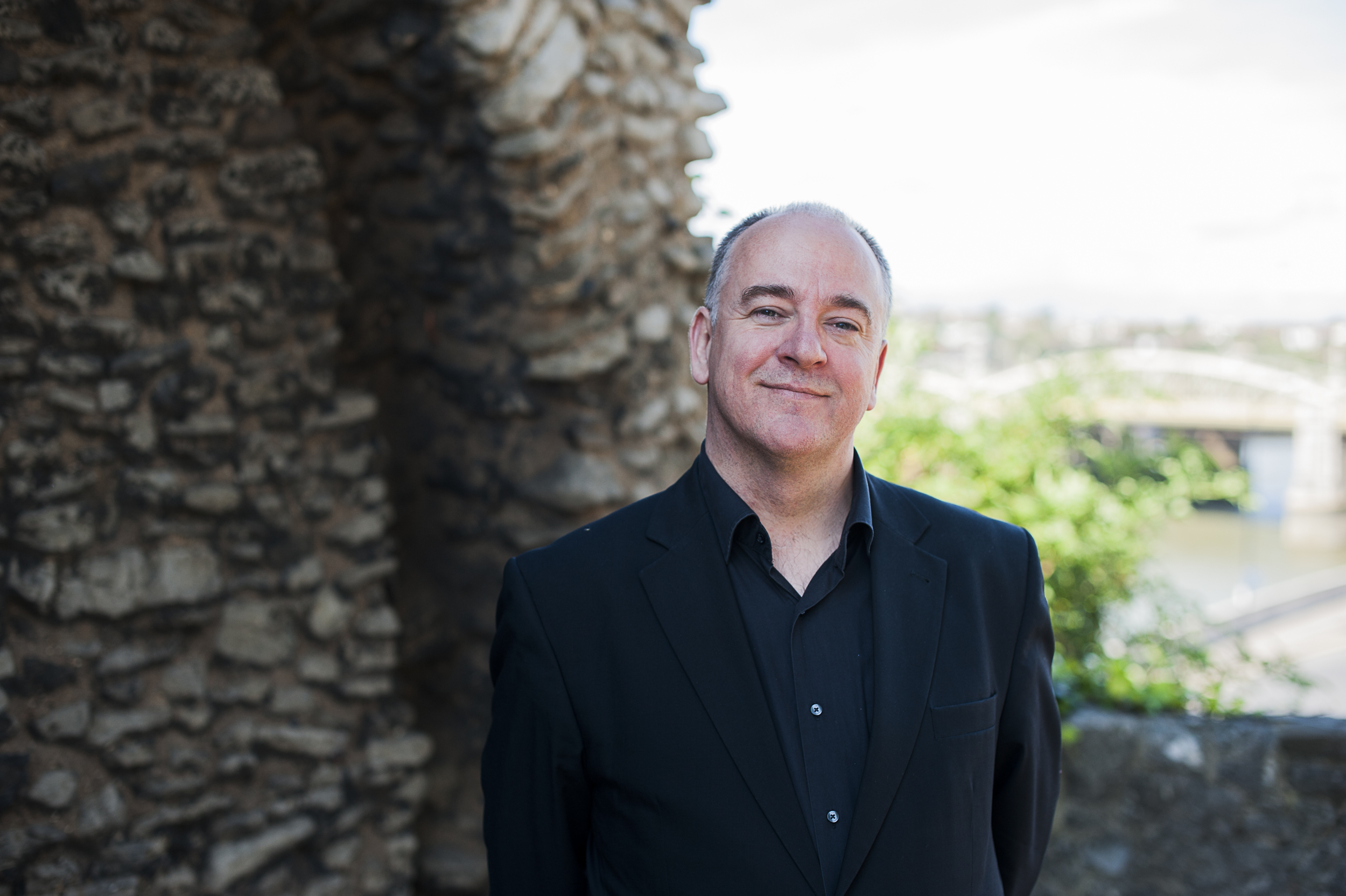
This interview was originally written in Dutch. This is an English translation.
Maintaining the status quo around Taiwan is crucial. If war breaks out, the consequences will be incalculable. The main risk comes from the US, where President Trump, or a potential successor, may decide to recognise Taiwan. That would tempt China to take actions that it does not wish to take on its own initiative for the time being.
By Joost van Mierlo
These are the words of Kerry Brown, a former senior British diplomat in China who has been Professor of Chinese Studies at King's College London for more than a decade. During that time, he has published a steady stream of books about the country. According to Brown, the situation surrounding Taiwan, the subject of his latest book, has “never been so unpredictable in the last fifty years”. Despite the strong language used by Chinese President Xi Jinping, however, he does not expect the greatest danger to come from China. “China is patient. The country still feels that its negotiating position is improving. Moreover, there are enough problems at home that need to be addressed.”
There is currently a debate in the United Kingdom about whether China should be seen as the main enemy. Is China?
'It’s a somewhat schizophrenic situation. On the one hand, you see that the British government wants to strengthen economic ties with China. After all, it is an economic superpower and its relationship with the United States is under pressure. On the other hand, there are stories about Chinese espionage. Of course, you have to take those stories seriously, but I don’t get the impression that China has a special interest in the United Kingdom.
I also think that China has no interest in increasing tensions with the United Kingdom or with Europe in general. It is not a country that likes to escalate conflicts. Most of China's international attention is currently focused on the US. Besides, China has enough problems of its own.'
How is China responding to the pressure being exerted mainly by President Trump?
'You can see that Xi Jinping is pursuing a policy of reducing dependence on other countries. That is something that has been pursued in recent years.
China is patient. The country still feels that its negotiating position is improving.
But of course there are limits. We do not live in a time when the Han dynasty and the Roman Empire could exist without having to take each other into account. With today's capital flows and internet traffic, it is not possible to isolate yourself completely. China realises this too. The Chinese attitude is mainly defensive, while that of the US is more offensive.'
Is China being driven into the corner of countries such as Russia and Iran?
'You can see that ties with these countries are being intensified, as was evident at the recent meeting of the Shanghai Cooperation Organisation. But it was not only these countries that were present; countries such as Saudi Arabia and Brazil also participated. These are all countries that are looking for ways to deal with the pressure being exerted on them by the US.'
Does that mean China is starting to play a key international role?
'You would expect that, given that the country has the second largest economy in the world, as well as the largest army and the most extensive navy. But if you look at the recent discussions about the ceasefire in Gaza, you have to conclude that China has not played any role whatsoever.
In fact, that applies to all major international conflicts. China mainly keeps to itself. I think one of the major challenges for China in the coming years will be to play a more active role in international relations. China is reluctant to do so, but it can no longer afford to remain on the sidelines.'
Speaking of problems at home, economic growth has been taken for granted for decades. Is that coming to an end?
'China faces many serious challenges, whether it be an ageing population, environmental problems or the economy. You can see that the country is still struggling with a property crisis and low economic growth. On the other hand, inflation is low and consumption is under pressure. The latter is an advantage because it means that political tensions are absent. After all, higher consumption almost inevitably leads to demands for greater freedoms. That is something the Communist Party leadership, and certainly Xi Jinping, does not want.'
What is the party doing to tackle these problems?
'The hope is pinned on technology. You will probably see this when the new five-year programme is presented shortly. There is massive investment in improving infrastructure, even though the country has already made enormous progress in this area. Everyone talks about the economic problems, and of course they exist, but the country also has the most advanced high-speed rail network. Robots are popping up everywhere on the streets, and self-driving cars are the norm. The choice to pursue further technological development is, of course, a gamble, but one that has paid off in recent decades.'
How do you view the situation in Taiwan? Xi is also using more threatening language there.
'It is true that there is more frequent talk of Taiwan being part of China. At China's request, Taiwan has also been excluded from international organisations. And there are many incidents in which China invades the territory around Taiwan with ships, aircraft or ballistic missiles, although the latter is often caused by China feeling provoked, as was the case a few years ago during the visit of Nancy Pelosi, who was then the Democratic leader of the US House of Representatives.
Nevertheless, one must distinguish between words and deeds. An armed conflict around Taiwan will change the world as we know it. It will unleash a Third World War. It will be a war whose consequences will be incalculable.
With today's capital flows and internet traffic, it is impossible to isolate yourself completely. China realises this too.
This is something that China also realises, quite apart from the fact that even if China were able to win such a war, it would not know how to achieve peace afterwards. After all, Taiwan has undergone an enormous transformation in recent decades. In the early 1970s, a large majority of the country identified as Chinese, but now that is a small minority. Young people in particular feel primarily Taiwanese and definitely not Chinese.'
So China will not take the initiative to wage war on Taiwan?
'I don't think so. The only way that could happen, in my opinion, is if the country were provoked to do so by other countries, particularly the United States, recognising an independent Taiwan.
Trump's unpredictability is his most striking characteristic. But although he has made it clear that he will defend Taiwan in the event of an attack, he is unlikely to go so far as to recognise Taiwan.
I am concerned, however, about what will happen when the race to succeed Trump begins. Who knows what will happen if people think they can make a name for themselves by taking an assertive stance towards China.'
But didn't Xi Jinping say that the Chinese army must be capable of taking Taiwan by 2027?
'There is a difference between words and deeds. China almost always opts for a gradual approach when it comes to solving problems. I suspect that will also be the case with Taiwan. Perhaps they will opt for a blockade, or something similar. It is more likely that China will simply wait and see. Who knows what the situation will look like in ten years' time? In recent decades, China's position has only become stronger, both economically and militarily. There is no indication that this will change in the coming years.'
An armed conflict over Taiwan will change the world as we know it. It will unleash a Third World War.
Political stability in China is of great importance in this regard. Recently, there were reports that CEOs of companies were being arrested on a large scale on suspicion of fraud. How worrying is that?
'We know little about the internal divisions among the Chinese population. In recent years, it has become increasingly difficult to make assessments about this. The arrests of CEOs are a sign of things to come. The Chinese political leadership attaches great importance to loyalty, to put it mildly. Stability under Xi has come at the expense of many freedoms. After all, it is not only entrepreneurs who are being arrested. The same thing has happened within the army. It's all about loyalty, but of course you don't want to end up in a situation where people are too afraid to do anything.
That is the problem Xi and the Chinese party leadership will have to deal with in the coming years. They are extremely wary of individuals or developments that influence and diminish their personal power. But economic incentives are also needed to stimulate entrepreneurs, especially now that the party attaches so much importance to technological progress.'
Isn't it difficult to develop a relationship with China when it's not even clear how China is tackling its own problems?
'Yes, it is. But it's not impossible either. What you see in China is that developing what I call networks is extremely important. China is the most important trading partner of more than a hundred countries. China has the most extensive network of diplomats in the world.
The country is looking for situations in which mutual differences are respected, but where cooperation leads to mutual benefits. It is a country that is very powerful and at the same time tries to avoid conflict. You have to deal with that very soberly. That is the challenge facing Western countries.'
|
Kerry Brown Kerry Brown studied English linguistics and obtained his PhD in 2004 with a thesis on the consequences of the Chinese Cultural Revolution for Mongolia. In the early 1990s, he spent several years teaching in Japan and Mongolia. In 1998, Brown joined the British Foreign Service and worked as First Secretary at the embassy in Beijing, among other positions. In 2005, he moved into academia. Since 2015, he has been Professor of Chinese Studies at King's College London and Director of the Lau China Institute. His book Why Taiwan Matters was published this year. |