Steven Poelhekke: How do we keep the climate transition on track in times of war?
This article was originally written in Dutch. This is an English translation.
Wars, free-rider behaviour and export restrictions are putting climate policy under pressure. Nevertheless, we must remain hopeful, argues Prof. Dr Steven Poelhekke, Professor of International Environmental Economics at VU University Amsterdam. According to him, optimism, a willingness to adapt and realistic policies, such as carbon pricing, are essential for a successful sustainable transition.
By Harry Geels
Why is climate policy often singled out as a scapegoat for problems that are in reality caused by other factors, such as globalisation and trends in international trade?
‘In recent years, the debate on the energy transition has taken on a new dimension due to various crises. The wars in Ukraine and Iran have shown that consumers can suddenly be faced with significantly higher prices for fossil fuels, leading to concerns about profitability and job losses. This frustrates climate policy that gradually prices in CO2 emissions.
Nevertheless, we must ensure that the plan we have mapped out for a carbon-neutral economy is not delayed. Businesses benefit from a clear path to follow, on which they can reasonably base their investments to reach the end goal. Deviating from that path now because of a temporary crisis would be short-sighted. The path is clear and is not expected to result in a net loss of jobs, as businesses and people can adapt to it. Sudden shocks in energy prices, such as those we are seeing now, make such adaptations more urgent, but also much more difficult. However, we must not confuse the issues. More generally, jobs will be lost in companies that are unable or unwilling to adhere to the mapped-out CO2 pathway, but there will also be winners that grow. The notion that globalisation costs jobs is outdated, because in the long run, labour shifts from companies that cannot compete to those that can and are actually thriving.
We must ensure that the path to a carbon-neutral economy is not slowed down by temporary crises.
The major challenges at present are the subsidies on fossil fuels from which various companies ‘benefit’, and the fact that European companies – due to carbon pricing – find it harder to compete with non-European companies outside the EU. This means there is no level playing field, and moreover, there is free-rider behaviour from countries that do not take sustainability very seriously. Fortunately, we now have the Carbon Border Adjustment Mechanism (CBAM), which imposes a levy on CO2-intensive imports from non-European countries, and alternative energy sources, such as solar and wind energy, are becoming increasingly cheaper.’
Could the sustainable transition not (also) be achieved through consumption taxes: lower VAT on green products and higher VAT on polluting products? Or through a moral appeal to consumers to reduce their consumption?
‘Consumption reduction is already happening on a modest scale, but not enough, because globally we are not flying any less nor are we eating any less meat. By introducing different VAT rates, we create a challenge, namely the problem of defining what constitutes clean and dirty products. That involves a great deal of discussion and policy-making. It is better to shape climate policy through CO2 pricing that companies must pay. A moral appeal is appealing, but in practice it is difficult to get everyone on the same page. If everyone is taking city breaks on cheap flights, it is hard for an individual not to join in. I also fear that behavioural change will take far too long. That requires upbringing and education. But anyway, every little helps.
So we must certainly continue to follow the path of morality. We just mustn’t count our chickens before they’re hatched. Incidentally, it is strange that there is still no VAT or excise duty levied on kerosene. That is a bizarre favouring of air travel over more sustainable modes of transport, such as the train.’
Your research shows that resource and energy booms do not always lead to prosperity. What determines whether energy independence actually makes a country richer rather than poorer?
‘It is not just about the question of prosperity, but also about autonomy. Since the wars in Ukraine and Iran, and America’s trade war with China, which is hampering the supply of scarce minerals, it has become clear to everyone that we do not want to be dependent on rogue states, or anything resembling them, for our energy. Sustainable energy is an important part of the autonomy issue. However, investments in an autonomous, sustainable energy industry also lead to high demand for all kinds of raw materials. To address this, the EU has drawn up the Critical Raw Materials Act (CRMA).
Unfortunately, due to our need for raw materials, we have to make compromises, for example by doing business with countries from which we would rather not import raw materials, or by allowing a certain degree of polluting mining and refining. This is likely to be a transitional phase until we are fully carbon-neutral. Part of the solution is recycling, but we need to get much better at it. I am optimistic, because I believe technology can take us a long way. But to do so, we must continue to invest in research, education and a sound financial infrastructure to support start-ups.
I do not believe in ‘degrowth’, but in green growth. In doing so, we must be mindful of potential wealth transfers. It may be that certain groups have to contribute more to the transition, whilst other groups benefit. This should be settled through the tax system, although I realise this is a political statement.’
How can the government best deal with political resistance to the sustainable transition?
‘Part of the political problem is that the energy transition has consequences for some jobs. Individuals must therefore be given help to retrain. Moreover, it affects everyone’s disposable income. If products and services become more expensive due to carbon pricing, if prices at the pump rise, or if all sorts of investments need to be made in the home, this affects lower incomes relatively more than higher ones. This must be partly offset through income policy, otherwise public support will disappear.
It is better to implement climate policy through carbon pricing than through moral appeals or VAT differentiation.
We need to be creative. In California, for example, electricity tariffs are income-dependent. In France, those on lower incomes can lease subsidised electric cars. The new €1 billion support package that the Dutch government has put together in the context of the Iran war also includes funds for those on lower incomes so that they can borrow interest-free to make their homes more sustainable.’
During recent crises, countries have imposed export bans on energy, food and raw materials. Your research suggests that such measures often backfire. Why do governments keep resorting to them?
‘There are indeed many examples of such bans. The US, which no longer exports certain chips as part of the trade war with China, or China, which in turn refuses to export certain critical minerals. We then see how dependent we all are on the “just-in-time” supply chains that stretch across the globe. Export bans on raw materials are a relatively new development. Indonesia, for example, has decided that raw nickel ore may no longer be exported unless it is first processed locally, ultimately leading to the manufacture of batteries or cars. The entire supply chain is then drawn into the country, with the aim of earning more from the raw material.
If the energy transition hits lower incomes harder, this must be compensated for through income policy.
This policy is not without risk. Billions in revenue from raw nickel are being foregone, whilst the profits further down the chain have yet to be realised. One of the challenges is attracting investors who wish to set up battery or car factories, for example. Another challenge is that nickel importers will start looking for alternatives. A third form of export ban involves restricting food exports to combat local food shortages. This too leads to supply shocks, inflation, and vicious backlash from other countries. Fortunately, scientists and NGOs, in particular the World Bank and the IMF, are trying to make us aware of the negative consequences of this kind of policy, albeit with mixed success, unfortunately.’
If you could correct one widespread misconception in the current climate and economic debate, what would it be?
‘If I really had to name just one, it would be that we must remain optimistic and avoid doomsday scenarios, which are mainly spread by activists. Extreme climate shocks, also known as ‘tipping points’, may occur, but the likelihood of this is difficult to determine. In the meantime, we can focus on adaptation. We can modify buildings, grow different crops, relocate or even migrate. This will reduce the impact of climate change. We underestimate the human capacity for adaptation. Moreover, we cannot afford the risk of failing to adapt.
Please note: it is a case of ‘both-and’: pricing and adaptation, and all the other matters we have discussed. We must help people or countries that lack the means to adapt as much as possible, for example through knowledge transfer, such as when our engineers help Bangladesh protect itself against flooding. Unfortunately, this kind of development aid is increasingly absent from the political agenda.’
Have you had any significant insights, lessons or convictions during your career that you have had to radically revise as a result of new scientific research?
‘Let’s be honest: economics is not an exact science, and we can never be entirely sure whether policies devised by economists – based on an economic school of thought or empirical research – actually work. One of the complications is that an economy is a “moving target”, due to technological developments and changing legislation, policy, institutions and morals. Economists are often asked for their opinion. I think we should offer it more often with the necessary modesty or humility. Keynes once aptly said that an economist must be a mathematician, historian, statesman and philosopher all at once. Incidentally, in our field, the bar for making assertions with certainty is set ever higher. On the one hand, this is a good thing – it strengthens the economist’s authority – but on the other hand, it also leads to economists who know a great deal about one subfield but miss the bigger picture.’
Finally: what are your personal and professional goals or ambitions for the rest of your life and academic career?
‘I feel like a true scientist. I enjoy conducting research and always have plenty of ideas for new research, particularly into emerging markets, because that is where we can make the most progress for humanity in general. Fortunately, things are already going well in the Netherlands. Perhaps, when the research ideas run dry, it will be time to look further afield, for example towards administration or politics. But for now, science is still far too fascinating.’
|
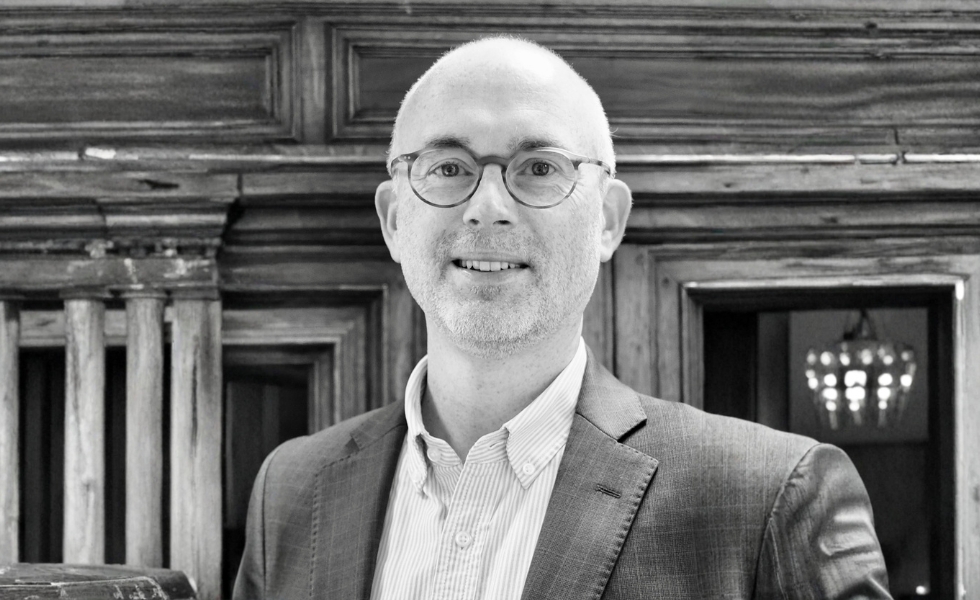
Steven Poelhekke Steven Poelhekke is Professor of International Environmental Economics at VU University Amsterdam. He obtained his PhD from the European University Institute in Florence and is a Research Fellow at CEPR. He previously worked at the University of Auckland and at De Nederlandsche Bank. His research interests cover international trade and investment, and their intersections with development and environmental economics. |
Read the full report in Financial Investigator magazine