Ruud Hendriks: 'Money loves speed' - lessons from a life in the world of finance
This interview was originally written in Dutch. This is an English translation
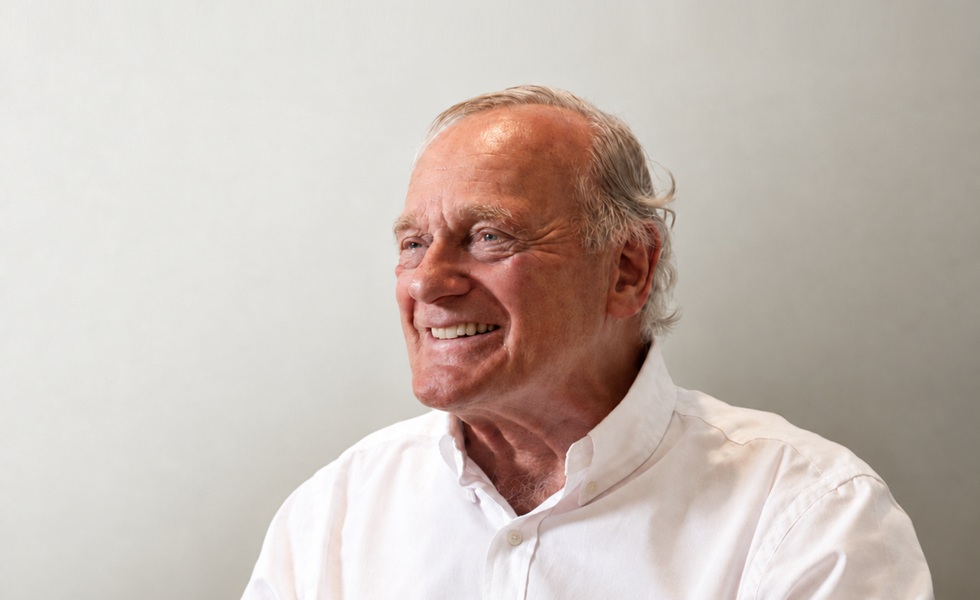
Ruud Hendriks is one of the doyens of the Dutch financial sector. He built an international career that took him via Robeco and Goldman Sachs to board and advisory roles and, ultimately, to entrepreneurship. Over the decades, he has witnessed the development of the asset management industry at first hand. Now that he has turned eighty and is still active, he looks back on the choices, cultural differences and life lessons that have shaped his career.
By Harry Geels
You’ve had a career spanning more than fifty years. Which choices or moments have been decisive for your professional development?
‘My career has never followed a set plan. After grammar school, I studied law at VU University Amsterdam and ended up in institutional asset management. I spent my first twenty years at Robeco. That’s where I learnt the trade and eventually rose to the position of Senior Vice President.
If I had to name one moment that was decisive, it would be my move from Robeco to Goldman Sachs Asset Management. On paper, I had it all sorted and wasn’t looking for anything else. Goldman Sachs initially offered me a contract for just one year, which made the decision a nerve-wracking and risky one. Yet my curiosity got the better of my desire for security, and in hindsight it turned out to be the best professional choice I have ever made. That move opened doors that would otherwise probably have remained closed. I found myself in an international working environment that has permanently broadened my outlook on investing, leadership and entrepreneurship.
That same entrepreneurial spirit has brought me to where I am today. As co-founder of R/A Wealth Advisors, I am now based in Amsterdam and Dubai, continuing to build an international platform of professionals from various disciplines, through which we offer high-net-worth families, family offices and entrepreneurs access to knowledge, experience and an international network.
Looking back, this is perhaps the most important lesson: the greatest opportunities often arise when curiosity trumps certainty. It is precisely the step where you don’t know in advance how it will turn out that often proves to be the most valuable in hindsight.’
What are the differences between Dutch and Anglo-Saxon asset managers?
‘That difference is greater than most people realise. In Dutch organisations, the collective is central: consensus, due diligence, consensus-building, longer decision-making processes and a strong compliance and risk culture. This leads to well-considered decisions, but is sometimes at the expense of speed. Moreover, loyalty to the organisation is often rewarded with a long-term career.
At Goldman Sachs, the emphasis was much more on entrepreneurship, personal responsibility and performance. There, you are, as it were, re-hired every day. You are given plenty of scope to make decisions independently and to bear full responsibility for them. Results are measured and rewarded immediately, and you build up your own business. There is no safety net, but there is no ceiling either.
Anglo-Saxon culture is more direct and commercial, and is far more accepting of risk as an integral part of entrepreneurship. The Dutch are more thorough and analytical, but sometimes spend longer seeking consensus. Anyone who has worked in both worlds learns when to take the time to weigh up interests carefully and when speed and decisiveness make all the difference.
One of the most important lessons I learnt at Goldman Sachs is: money loves speed. An email that sits unanswered for two days is a missed opportunity. A phone call within an hour can make all the difference. Asset managers can rarely set themselves apart in the long term through returns, but they certainly can through service.’
After such a long career, there are undoubtedly more lessons you’d like to share.
‘An important lesson is that you must dare to take an uncertain step at the right moment. If I’d stayed at Robeco in 2000, I’d probably have had a fine career, but I’d have missed out on everything that followed. Comfort is the greatest enemy of growth. Another lesson is: if you can land at the top, you shouldn’t have to climb there first. I deliberately approached people whom others thought were out of reach, and took on projects that were seen as too ambitious. Combine daring with a carefully chosen starting point. Starting higher up can save you years. That’s why I often say: asking costs nothing; not asking costs everything.
In addition, invest continuously in your network. Not in a transactional way, but sincerely. Every day, I try to meet someone I don’t yet know and make time for existing relationships, without expecting anything in return straight away. Many of the best opportunities in my life have arisen from conversations that began years earlier without any business agenda. You don’t build a strong network when you need it, but long before that. Institutions open doors, but ultimately it’s one person who walks into another person’s life. People do business with people, not with logos.’
How does that approach to networking without immediate reciprocity relate to the pressure to prove yourself at Goldman Sachs within a single year?
‘That might seem contradictory, but for me the two were actually complementary. My approach was never to sell something, but to first understand what someone really needed. That’s why I placed great value on personal contact. When you sit down with someone at a table, in their own city and culture, you understand much more quickly what’s on their mind. Simply ask a potential client what they need to become a client, listen carefully and assess honestly whether you can deliver that.
Sometimes that calls for a bit of entrepreneurial spirit. At Goldman Sachs, I secured my first major client within twelve months with a solution that I wasn’t initially sure we could fully deliver. I then did everything in my power internally to make good on that promise. There’s an important lesson in that: don’t be afraid to challenge yourself and your organisation, as long as you remain honest about what is and isn’t possible. High customer expectations often force organisations to improve. If you then live up to those expectations, trust is built. And trust leads to new relationships, new contracts and further growth.
I have travelled all over the world and, as a result, have come to know and appreciate different cultures. You discover how people deal with time, trust and decision-making. Trust is ultimately the only currency that has the same value everywhere in the world. The transaction then usually follows naturally.
That brings me to perhaps the most important lesson: always prioritise your reputation over the transaction. A single wrong decision can undo what you have built up over twenty years. Discretion, loyalty and integrity are not just empty slogans, but the foundation of long-term success. I have also learnt to listen to my intuition: where people do not act with complete integrity, problems will arise sooner or later.
Finally, don’t wait for the perfect moment, because it usually doesn’t exist. Those who wait for absolute certainty often miss the opportunity because someone else has already acted. And believe in optimism. In the financial world, you can hear many clever people explain in minute detail why something won’t work. Optimists build businesses and bring people together; cynics write memos explaining why something can’t be done.’
Which investment lesson has helped you the most, and which would you like to pass on to every investor?
‘The most important lesson is patience. Most wealth is not built up by trading constantly, but by giving good decisions time to prove themselves. Investing is less a contest of intelligence than an exercise in discipline. Gather information, think carefully, and then act with conviction. Decisions you do not fully stand behind rarely yield good results.
Money loves speed. An email left unanswered for two days is a missed opportunity. A phone call within an hour can make all the difference.
Diversification and concentration both have their place. Diversification protects against the unforeseen. Concentration builds wealth, provided you truly understand what you are investing in. Successful investing is not about predicting tomorrow, but about combining knowledge, patience, discipline and common sense over the long term. The power of the compound interest effect is still underestimated. Time is often an investor’s best ally. It is not for nothing that compound interest is called the eighth wonder of the world.’
You recently turned eighty, but you’re still very much active. What keeps you most occupied and where do you draw your energy from?
‘First and foremost, I still really enjoy working. My network remains a major source of inspiration and energy. I follow geopolitics, the financial markets, technological innovation and the major global developments that affect investors.
Take the world of institutional investment, for example. Since 1985, the number of pension funds, insurers and banks has fallen sharply, whilst assets under management have, in fact, grown explosively. Institutional investors have become larger and more international. At the same time, we are seeing the strong emergence of sovereign wealth funds and family offices, particularly in emerging economies. Alternative investments, such as private equity, private debt and infrastructure, have also evolved from a niche into a fully-fledged component of many investment portfolios.
You don’t build a strong network when you need it, but long before that. People do business with people, not with logos.
In addition, I am continuing to develop R/A Wealth Advisors with a team of experienced specialists, and I enjoy advising young entrepreneurs. Their energy and ideas keep me on my toes. I also believe it is important to pass on my knowledge and experience to the next generation. That is why I am involved in various AI initiatives and am committed to a charity that makes financial education accessible to children from primary school onwards. To me, retiring feels like stopping at a time when I still start every day full of energy and curiosity. As long as I enjoy what I do and remain curious about what tomorrow might bring, I’ll stay active. Perhaps that has been the most important common thread running through my life.’
You live and work partly from Dubai. What is it that is causing more and more entrepreneurs and high-net-worth families to set their sights on countries outside Europe?
‘Taxes play a part, but the story is much broader. Entrepreneurs and high-net-worth families look at the bigger picture: policy predictability, security, quality of life and, above all, the scope for entrepreneurship. In conversations, I notice that bureaucracy in parts of Northern Europe is increasingly seen as an obstacle and that entrepreneurship is no longer valued as a matter of course as it used to be.
The United Arab Emirates, Qatar and Saudi Arabia, in particular, are making targeted investments in infrastructure, security, technology and education. Dubai is perhaps the most striking example of this: a modest fishing village on the edge of the desert that has grown into an international financial and business hub in the space of a few decades. It is striking that it has long since ceased to attract only the very wealthy, but also entrepreneurs with medium-sized businesses. It is precisely these entrepreneurs who are investing, creating jobs and stimulating innovation.
To me, the Netherlands remains a wonderful country, with strong companies and exceptional talent. The question is how we ensure that entrepreneurship, talent and capital continue to be tied to the Netherlands in the future. As far as I’m concerned, this presents not only a challenge, but above all an enormous opportunity.’
|
Ruud Hendriks Ruud Hendriks is a co-founder of R/A Wealth Advisors. He previously held senior positions at Robeco and Goldman Sachs Asset Management and was a Senior Advisor at KKR. He has also held various international board and advisory roles. He advises family offices, entrepreneurs and institutional investors on wealth management, governance, strategic issues, cross-border investments and international wealth structures. |