
From data to investment decisions (’Beyond Net Zero’ round table – part 2)
This report was originally written in Dutch. This is an English translation.
In part 2 of the ‘Beyond Net Zero’ round-table discussion, the experts discuss how investors can measure risk and impact. What data sources are available, how reliable are they, and how can investors make responsible investment decisions despite limited data? The minimum requirements for investments are also discussed.
By Hans Amesz
|
CHAIR: Jochen Harkema, ING Global Investment Centre
PARTICIPANTS: Tim Balemans, MN Adrien Cambonie, UBP David Hawkins, Allianz Global Investors Robert Klijn, Fair Impact Marjolein Meulensteen, a.s.r. vermogensbeheer Nicholas Moss, Nuveen Natural Capital Karel Nierop, Triodos Investment Management Maria Velkova, Aqua-Spark |
What are the key data sources in the field of biodiversity, and what are their most significant limitations for investors?
Nierop: ‘A practical way to measure improvements in biodiversity – which simultaneously mitigates risks and offers a solution for both forestry and agriculture – is soil health. This is one of the core objectives of our investment strategy in these sectors. Soil health can be measured, amongst other things, by analysing the organic matter in the soil, taking soil samples and monitoring over time how the density and content of organic matter increase. By reducing or eliminating the use of chemical inputs and using biological alternatives instead, you can improve soil health, thereby providing better protection against flooding and even fires.’
Moss: ‘We make use of numerous datasets and methods, but one of the most interesting ones we have been working on is natural capital accounts. With these accounts, we aim to map out all the ecosystem services on which a farm, forest or other land-based asset depends. We then apply economic analyses to assign a financial value to these, so that we can assess the services they provide, much like a financial balance sheet. The significance of this is that it offers investors a way to conceptualise ecosystem services that are difficult to understand. Soil health, for example, equates to dollars, just like ecosystem health and production. If you can present all of this in a way that investors can understand, whilst also demonstrating where degradation leads to losses, it becomes an effective tool for management as well. The methodologies are still under development, though. It is difficult to arrive at some of these insights, but I think that, at present, it is one of the best ways to conceptually establish a holistic model of ecosystems, biodiversity and their economic value.’
For us, it is primarily about the integrity of the ecosystem in the places where we invest.
Meulensteen: ‘We can measure a great deal at project level and use that information to create proxies, but for larger portfolios. Even though this data isn’t always based on actual on-site measurements of biodiversity, it does provide a good initial picture. Scientific insights are also developing at breakneck speed. Although the information isn’t always perfect, there’s enough to guide our decisions.’
Cambonie: ‘We’re seeing more and more data providers using satellite imagery via spatial analysis. That doesn’t solve all your problems, but if, for example, you want to get an idea of the risk a company faces in the supply chain, you can compare different assets against various environmental layers – such as water stress or deforestation – and from there gain an understanding of the environmental risk.’
Hawkins: ‘Many companies offset their CO₂ emissions and also try to measure nature-based solutions. How can you measure what you’re doing? For example, you might plant a thousand trees, but the success rate might only be 40 per cent. How do you maintain that? How do you monitor it? I recently came across a company that not only uses remote sensing but also deploys people on the ground. They look at the investment’s life cycle: in this case, the trees over time. The available datasets combine various elements, such as chlorophyll indices, which effectively amounts to constructing a kind of measuring instrument to verify your investment. This has been highly relevant for quite some time, both for offsetting and for actual reforestation projects.’
Nierop: ‘In addition to data at the level of individual assets or investments, at some point you also want to have portfolio-level data, using proxies, so that you can compare them. This provides a more standardised framework for determining the biodiversity footprint of an individual investment, or even a portfolio.’
Balemans: ‘Data in the field of biodiversity is rapidly evolving. An increasing number of data sources are becoming available, ranging from corporate reports to scientific data on ecosystems, land use, deforestation and water use. At the same time, it remains a challenge to link these different data sources and translate them into consistent indicators for investors. For example, information on the state of nature is often more readily available than data on the impact and dependencies of individual companies. Through the Partnership for Biodiversity Accounting Financials (PBAF), we are contributing to the development of standards and methodologies that help financial institutions incorporate biodiversity data consistently into their analyses and reporting.’
Velkova: ‘What I’ve heard is that we do know what has a negative impact on biodiversity, but we don’t really measure what has a positive impact.’
Nierop: ‘In fact, a great deal of attention is being paid to how to measure positive impact. If you look at the key drivers of Important Bird and Biodiversity Areas – or IBAs – for biodiversity legislation, which is fairly well documented, it’s quite clear which factors you need to be wary of, or where, when making investments, you need to check what policies a company has, for example, regarding deforestation or renewable energy.’
Precisely because pension funds have commitments spanning decades, it is important to look beyond the issues of the day.
Velkova: ‘I think we’re only just scratching the surface of what’s happening within the system. We’re not really measuring the impact that, for example, fishing has on the climate and the ocean. As soon as you catch small fish, you lose the large and even larger fish, for instance. Any schoolchild would understand this connection, and yet we don’t factor it into our thinking.
Nierop: ‘When you talk about investing in biodiversity and nature, the discussion mainly revolves around the question of what you can demonstrate to show a positive impact. I think that’s the wrong discussion to be having. We actually already know how things can be improved. It’s also about what we’re doing right now – not just from a moral standpoint, but also from a financial one, in terms of both the risks of inaction and the opportunities that exist.
Could you make allocation decisions based on limited figures?
Hawkins: ‘We’ve seen cases of power stations trying to switch to a biomass-based setup as a transitional measure, whilst continuing to use fossil fuels in the meantime. In the United States, there’s a process of authorised afforestation around those plants. The surrounding forest is felled – obviously for timber products – and whatever is left on the ground is burnt on site. The idea was that the biomass power station would use the residues – which would simply be burnt anyway – as fuel for its own electricity generation. They themselves consider it a very green approach, but we do not really regard it as ‘renewable’. It is a transitional measure, provided certain conditions relating to the residual materials are met. We did, however, carry out environmental due diligence. In this specific case, the greatest risk for us was that they had no anti-deforestation policy, no procurement policy, and limited due diligence in the area of procurement, even though their parent company would commit to this and collect all this residual wood and supply it to them. We then said: ‘There is a risk that you will ultimately be supplied, in part, with timber from highly valuable forests in the area – primeval forests with high biodiversity. Good governance is needed there.’ It took them some time to process this, but they did take it to heart. This is an example of how biodiversity loss can be kept to a minimum. As part of the agreement, we also agreed to revisit this in six months’ time, as we regard this as a relatively significant risk.’
Balemans: ‘The data may not yet be perfect, but there are certainly opportunities to make use of it. For us, it might be more effective to focus more on the underlying causes of biodiversity loss rather than relying solely on aggregated footprint figures. The causes include factors such as changes in land use, water consumption and pollution, and the exploitation of resources. In our view, the relevance of these causes also varies from sector to sector. Aggregated data can be useful tools for determining what is important within each sector.’
Meulensteen: ‘For us, it is important that companies with significant market influence that are at high risk, or exposed to risks, have plans in place to mitigate those risks and carry out the assessments themselves. What is their impact? And if they can determine this at a local level, so much the better.’
What minimum requirements must be met before an investment is made?
Hawkins: ‘In the screening process, there is definitely a minimum threshold or a red flag. There are a few truly fundamental best-practice elements. The best practices are, in fact, the basic principles. The spectrum can be broad: you have companies in the portfolio with very high standards, but also companies with low – or rather, immature – standards. At the basic screening stage, it essentially comes down to the question: how do you deal with protected areas, or areas of high landscape or net value? We will also provide recommendations and advice to improve the situation. For example, we have made suggestions regarding good practices, what responsible management entails, and what a deforestation policy should look like.’
Velkova: ‘Any form of extraction activity that depletes the ocean is a no-go for us. That is something we cannot see how it could ever be properly mitigated.’
Nierop: ‘We have comprehensive minimum standards covering various topics. As a matter of principle, we do not invest in fossil fuels, mining, large-scale industrial agriculture, and so on. We have a universe of companies that do meet our minimum standards. We carried out a portfolio scan on this basis and subsequently conducted an assessment, particularly in the area of biodiversity. We want to engage in a very targeted dialogue with companies. So: what are the high-priority issues and sectors we need to focus on for our biodiversity programme? The issues we have identified are deforestation and water pollution.’
At the asset level, there is a real opportunity to combine food security, CO₂ storage and biodiversity.
Meulensteen: ‘As far as deforestation is concerned, we do not invest in palm oil producers that produce non-certified palm oil. The same applies to paper companies that do not adhere to the Forest Stewardship Council’s (FSC) strictest standards. The possibility of engaging in dialogue with companies is perhaps an even more important factor for a listed investment portfolio.
|
Jochen Harkema Jochen Harkema is co-manager of the ING Impact Fund and has been a Sustainable Investment Specialist at the ING Global Investment Centre since 2012. He combines fund selection with the development and assessment of ESG policies. Harkema publishes on material sustainability developments and advises analysts and portfolio managers in this field. He is also the author of ‘Sustainable Investing for Dummies’. |
|
Tim Balemans Tim Balemans is a Responsible Investment Adviser at MN, a fiduciary adviser and asset manager for clients including PMT and PME. In this role, he advises on strategy development and active shareholding in the areas of climate and biodiversity. He also played a key role in establishing biodiversity as a theme within responsible investment and in setting up MN’s engagement programme on biodiversity. |
|
Adrien Cambonie Adrien Cambonie is a specialist in impact investing and an equity portfolio manager at Union Bancaire Privée, where he has built up in-depth expertise in financial and impact analysis, stakeholder engagement and impact measurement over the past eight years. He currently manages a Biodiversity Restoration fund and deploys capital in the public markets to drive environmental change. |

|
David Hawkins David Hawkins has over 15 years’ experience in sustainability and governance within private markets and has recently joined the Impact and Sustainability Private Markets team at Allianz Global Investors. Prior to this, he was Senior Vice President of ESG at NextEnergy Group and Environment & Sustainability Lead within the oil and gas sector, with responsibilities spanning aviation, logistics and property, amongst other areas. |
|
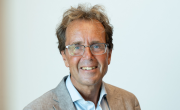
Robert Klijn Robert Klijn is the founder of Fair Impact, an independent consultancy firm serving pension funds, asset managers and research boutiques. He began his career in 2002 at ING Equity Markets as one of the first ESG specialists in the Netherlands and, through Fair Impact, has represented several leading ESG research firms. |
|
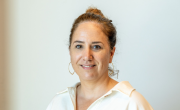
Marjolein Meulensteen Marjolein Meulensteen is Senior Adviser on Responsible Investment at a.s.r. Asset Management. In her role, she is responsible for developing strategy and policy on responsible investment, as well as policy on biodiversity and natural resources. She previously worked at a.s.r. as Sustainability Manager and as a Consultant on International Environmental Policy. |
|
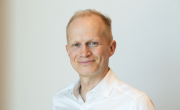
Nicholas Moss Nicholas Moss is Head of Nature-Based Solutions at Nuveen Natural Capital, where he is responsible for developing investment strategies and managing a portfolio in the fields of forestry, agriculture and ecological restoration. With over 15 years’ experience, his roles have included managing a fund focused on sustainable agriculture and forestry. He previously worked at Mirova Natural Capital and PwC. |
|
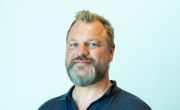
Karel Nierop Karel Nierop is Head of Products & Solutions at Triodos Investment Management. He is responsible for developing scalable impact investment strategies, including in the areas of biodiversity and natural capital. With over 20 years’ experience in banking and impact investing, 15 of which have been spent at Triodos, he combines his extensive investment expertise with a strong focus on the benefits that investments bring to nature and society. |
|
Maria Velkova Maria Velkova is Chief Investment Officer at Aqua-Spark, an Article 9 impact fund that allocates capital across the sustainable aquaculture value chain. She is responsible for managing and expanding the portfolio, which spans production (farming), alternative food ingredients, aqua technology and health solutions. |
Read the report in the digital magazine