
Frank Meijer: Alternative fixed income is finding its way into the Dutch business sector
This interview was originally written in Dutch. This is an English translation.
Aegon Asset Management is expanding its range of alternative fixed-income funds. Financial Investigator spoke to Frank Meijer, who is in charge of the platform, about the reasons behind this expansion, the drivers of growth and common misconceptions surrounding alternative fixed income, and the growing interest in investing closer to home.
By Michiel Pekelharing
Why are institutional investors increasingly opting for alternative fixed income alongside traditional bonds?
‘I see five reasons. The first is the yield premium. In every segment of alternative fixed income – from AAA to single-B, and from liquid to illiquid – the spread is considerably higher than for government and corporate bonds with a comparable risk profile.
The second reason is that many strategies involve floating rates. The interest rate on asset-backed securities is often linked to Euribor, as is typically the case with private corporate loans. In a climate of rising interest rates, this is advantageous, but it also aligns well with the Future Pensions Act. This Act allows greater scope for the ‘return portfolio’, which is less interest-rate sensitive than the ‘matching portfolio’.
The third reason is risk diversification. Pension funds invest heavily in equities and investment-grade bonds. However, there are only a few hundred large companies to choose from, and these are often held in both the equity and bond portfolios. In private debt and ABS, there are thousands of companies, projects and pools of consumer loans in which to invest.
The fourth reason is ESG and impact. In liquid markets, you can mainly pursue an exclusion policy. But if you exclude everything and anything, you won’t change the world. In private markets, you can finance wind farms or small businesses in the circular economy that haven’t issued bonds because they are too small to do so.
The fifth reason is the capital treatment under the Solvency II and Basel insurance and banking regulations. Solvency II does not penalise illiquidity, so you receive an illiquidity premium for the same capital requirement. This has led to strong demand for private debt from insurers, particularly for investment-grade strategies such as mortgages.
Your ABS funds now have more than €10 billion in assets under management. What explains the growth you have seen?
‘ABS is liquid and the funds generally have a UCITS structure with daily liquidity, just like corporate credit. The beauty of ABS is that you can choose your own risk profile. We have a fund focused purely on AAA-rated assets with very low risk, which nevertheless yields much more than AAA government bonds and even more than corporate credit. In addition, we have ABS and CLO Opportunity funds that focus on BB-rated bonds and offer much higher yields than high-yield corporate bonds.
The investment-grade ABS fund, which I set up myself back in 2005, invests in securities ranging from AAA to BBB. That fund offers an additional spread of around 70 to 80 basis points over corporate credit, whilst the average rating is higher than that of corporate credit. The combination of a high spread, lower credit risk and a variable interest rate makes it an attractive alternative to corporate bonds for many investors.
We are seeing significant inflows from the United Kingdom. There, our solution is held in the portfolios of around 130 pension funds. These funds are scaling back their substantial exposure to corporate credit somewhat and adding ABS to their portfolios for greater diversification and extra returns. The rationale behind diversification is that ABSs are typically backed by pools of Dutch or UK mortgages or car loans. So you introduce consumer risk into your portfolio, alongside the corporate risk associated with shares and corporate bonds.
Instruments such as ABSs and CLOs are still regularly associated with the credit crisis. How accurate is that perception today?
‘Every conversation with a potential client does indeed still revolve around the subprime crisis, but the negative image does not do justice to what these instruments actually look like these days. For example, we are only allowed to buy an ABS bond or CLO if we have insight into all the loans that make up the collateral. I sometimes joke that a bank is actually the real black box. If you buy a share or a bond from a major bank, you have no idea exactly what’s on its balance sheet. Banks do not share loan-level data.
The figures also tell a different story to the prevailing sentiment. In Europe, the cumulative default rate on the ABS market has been just 1.6 per cent since 2007. That is lower than in corporate credit. Our own ABS funds have never experienced a default since their inception in 2005. ABS bonds backed by US subprime mortgages did indeed perform very poorly during the credit crisis. This has dealt a significant blow to the reputation of the entire ABS market. This is unjustified, however, as ABS bonds backed by, for example, Dutch, Italian and Spanish mortgages and car loans have not defaulted and have paid their coupons and principal.
The same applies to CLOs. Alongside broad-based ABS funds, demand for pure CLO strategies is now clearly on the rise. That is why we have set up three CLO funds with daily liquidity: one focused primarily on AAA-rated CLOs, one on a mix of BBB- and single-A-rated CLOs, and one on BB-rated CLOs.’
You have launched a new fund for Dutch private loans. What developments have led to this?
‘I see a few developments converging here. The first is geopolitical. You want to be less dependent on other countries and ensure that your own economy is strong. Linked to this is the Wennink report, which asks how to enable Dutch companies to grow and organise the necessary financing. Banks play a role in this and will continue to do so, but there are also pension and insurance funds that can stimulate our own economy.
Added to this is the Wtp. Pension funds are likely to invest less in ‘matching assets’ and more in ‘return assets’. High-yield private debt with a variable interest rate fits in well with this. Moreover, the Dutch private debt market for smaller mid-caps and SMEs is far less saturated than, for example, the US market, meaning the risk-return profile is more favourable here. And an increasing number of pension funds prefer to make an impact closer to home rather than far afield. Financing the Dutch business sector can therefore become an end in itself. Furthermore, among those Dutch companies are firms that, for example, recycle plastic or are working on the energy transition.’
What role can private debt play in financing Dutch companies and bridging the financing gap for growth and innovation?
‘Banks still grant loans to companies, but they do impose specific requirements regarding the maximum leverage or size of the loan. For example, it is common practice for banks that the ratio of a loan to EBITDA must not exceed three. If a growing company wants to build a new factory with additional funding from the bank, this poses a problem, as EBITDA only increases once the factory is operational.
Ten years ago, we therefore set up a strategy for subordinated loans. The bank provides the senior loan up to three times EBITDA, and we provide the subordinated loan on top of that, so that the company can finance its growth plans. Furthermore, our loans to SMEs and smaller mid-caps that promote innovation are often 50 per cent guaranteed by the European Investment Fund. This allows you to combine high coupons from subordinated loans with a solid safety net.
In every segment of alternative fixed income, the spread is considerably higher than for government and corporate bonds with a comparable risk profile
In my view, this represents a unique investment proposition in the Netherlands. We have entered into so-called framework intercreditor agreements with the three major banks, which facilitates the origination process. In this way, we complement the banks rather than competing with them. Apart from subordinated loans, we also provide senior loans in partnership with the major banks. Alternatively, we combine a senior loan and a subordinated loan into a single unitranche loan offering a more attractive return. This allows us to offer companies a choice of loan options.
What sets your organisation apart from other players in the private debt market?
‘Our investment team consists of former bankers from the major banks, people from private equity and debt advisory, and specialists who have spent years working on restructuring at banks. I believe we have the largest private debt team in the Netherlands. Everyone speaks Dutch. For large companies, that doesn’t matter, but SMEs and smaller mid-caps prefer to deal with Dutch people rather than English parties and English law firms. That gives us an advantage over foreign parties, and we find that we are often the first to receive a call regarding a loan application.
Added to this is a ten-year track record with strong investment performance, our unique partnership with the European Investment Fund, and the fact that we are active across all three categories: senior, unitranche and subordinated.
Where do you see the greatest opportunities for institutional investors within alternative fixed income in the coming years?
‘If you need liquidity, ABS offers very good opportunities. In my view, ABS is still in its infancy as a genuine institutional asset class. US insurers have, on average, invested around 25 per cent of their balance sheets in ABS. In Europe, that figure is less than 2 per cent, and not much higher for pension funds. In the UK, almost every pension fund is invested in ABS, but that wave has not yet reached the European mainland.
The capital requirements for ABS, and specifically for CLOs, have fallen significantly under the latest Solvency II regulations. We have just secured a major mandate from a French insurer that was driven precisely by this factor. On the private side, we are seeing significant inflows into capital call finance as an alternative to corporate credit.
Co-lending alongside development banks in Africa and other emerging markets, with a specific loan purpose – such as schools or hospitals – and backed by 100 per cent credit insurance, also yields single-A or AA-rated assets with real impact and a significantly higher return than corporate credit. Our new Dutch private debt fund also offers a very interesting investment option if you are seeking higher yields and local impact.
More broadly speaking, I expect demand for fixed-income investments to rise. Investors typically expect a return of around 7 per cent on shares. It is now becoming increasingly easy to achieve this in fixed-income investments, with less risk and volatility. And volatility in interest rates and geopolitics is likely to persist for some time yet. In that climate, it makes sense to have products spanning the entire risk spectrum. This ranges from AAA-rated ABS for those concerned about the state of the world, to non-investment-grade private debt as an alternative to high-yield bonds and shares. We don’t want to be a one-trick pony, but a broad-based alternative fixed-income player that excels in every area.’
|
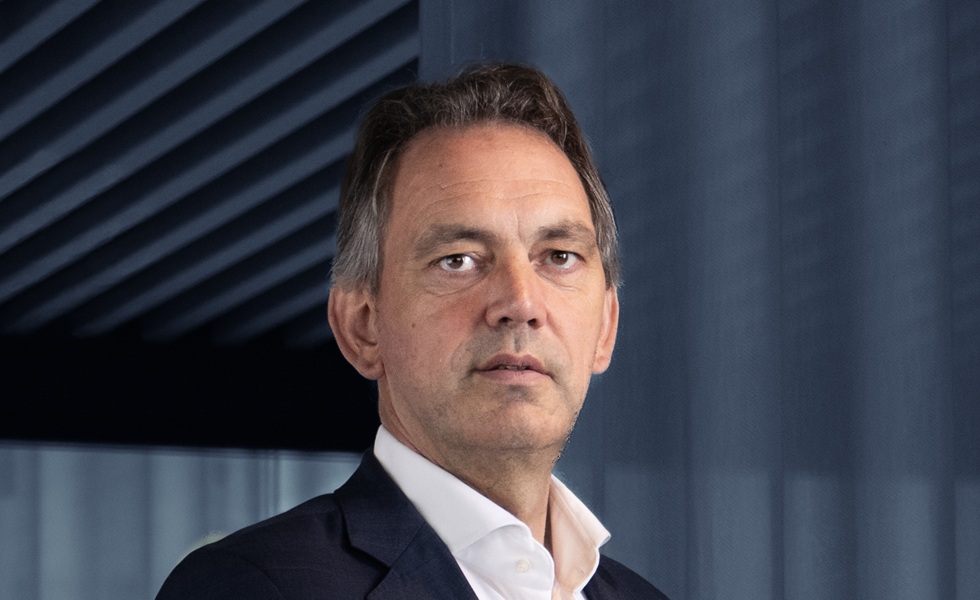
Frank Meijer Frank Meijer, PhD, is Head of ABS & Alternative Fixed Income at Aegon Asset Management, where he is responsible for activities in the areas of private debt and structured finance. Before joining Aegon Asset Management in 2005, he worked in the credit risk modelling department at ABN AMRO, where he began his career in 2000. Meijer obtained a Master’s degree in Physics (cum laude) from the University of Groningen and was awarded a PhD by Delft University of Technology. |

Read the report in the digital magazine